

Substance & Signalling (1/2): Brands, Value & You - What Really Pays Off?
Why your brand choices matter less than your value decisions.

The Brand as Signal
Think back to how brands began.
In every category - clothes, food, tools, electronics - someone made a great product. Then came copycats. Over time, the originals needed a way to stand out, to say “this is mine.”
That mark, that logo, that name - it was a signal of trust. A shorthand for quality.
But brands evolved beyond trust.
They became identity.
Some stood for reliability. Others stood for aspiration. In the luxury segment, that aspiration became the product itself. You weren’t just buying leather or steel - you were buying what it said about you.
The handbag, the watch, the car - they became a language of status.
Owning one told the world you’d “arrived.” And whether people admit it or not, that social signal often feels as valuable as the product itself.
The Price-Value Gap
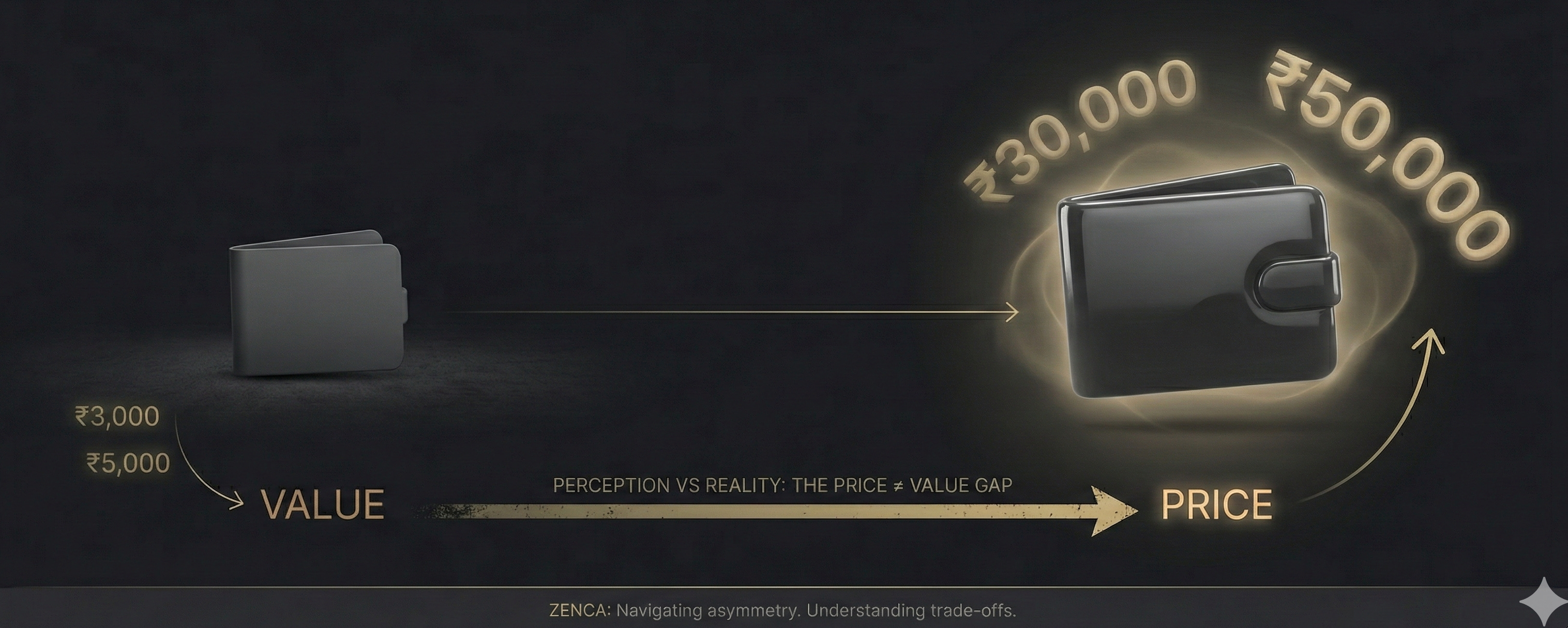
Here’s what most people miss: the gap between price and value.
That ₹1 lakh (~$1,000) wallet you see in the store? It’s probably made for ₹5,000–₹20,000 (~$50-$200).
The rest - ₹80,000 (~$800) or more - isn’t for the leather. It’s for the story, the logo, the emotion you feel when someone notices it.
And that’s okay - if you understand what you’re paying for.
The problem starts when you mistake perception for performance - when you think you’re buying “quality” but you’re really buying “symbolism.”
When Brands Make Sense (and When They Don’t)
There’s a difference between paying for reliability and paying for recognition.
You should pay for brands when:
The brand ensures durability, performance, or safety (think electronics, vehicles, or tools).
The after-sales service or ecosystem genuinely makes your life easier.
You shouldn’t pay for brands when:
The price premium gives you no additional utility.
You’re early in your financial journey and that money could compound instead.
In other words: spend on brands that protect value, not ones that erode it.
Compounding vs Consumption
Here’s a thought experiment:
Say you save ₹1 lakh (~$1,000) and invest it at 12% annual returns. In 12 years, it becomes ₹4 lakh (~$4,000).
Now ask yourself - do you want a ₹1 lakh (~$1,000) bag today or ₹4 lakh (~$4,000) working for you in the future?
When you’re still building wealth, every rupee saved adds to your compounding base.
Luxury is wonderful - but it’s sweeter when it comes after financial independence, not before.
Rethinking Your Relationship with Brands
You probably don’t think of yourself as “brand obsessed.”
Yet, brands influence more than just what you buy. They shape who you trust, what you take seriously, and which ideas feel credible - often before you’ve examined them closely.
Start noticing:
Where a brand truly delivers value.
Where it’s just feeding your ego.
As you build wealth, the goal isn’t to avoid brands - it’s to use them consciously.
Buy the premium car when you can do it from your returns, not your savings.
Buy the luxury watch when your compounding pays for it, not your EMI (equated monthly installment).
The Takeaway
Brands will always have power - because humans are wired to signal.
But the smartest signal you can send isn’t the logo on your wallet. It’s the quiet confidence that you’ve built your base right.
Your real “brand” is the discipline you build around money.
Every thoughtful decision compounds - not just your portfolio, but your self-respect.
Try this today
Think of one brand purchase you’ve made recently.
Ask yourself:
What value did I actually get?
What signal was I paying for?
Would it have genuinely strengthened your financial position - or mainly projected success to others?
Now imagine if that same amount had been invested instead - in yourself, your skills, or your compounding base.
Would that decision have built more value for you - or just changed how you appeared?
Disclaimer
This is educational content, not financial, investment, tax, or legal advice.
Zenca shares perspectives and frameworks to help you think clearly - your decisions are your own.
Please think independently and do your own research.
I write to improve how we think about money.
If this helped you think more clearly about money, you can subscribe to Zenca to receive future essays directly.
Every subscription is a vote for thinking more clearly about money.
And if this resonated, take a few seconds to share it — it might change how someone else thinks about money too.