

The Cost Of Wanting Things Now (3/4) || The Truth About “Zero-Cost EMIs”
When interest disappears, cost doesn’t - it just moves out of sight.

“Zero-cost EMI” sounds like a financial miracle.
No interest.
No extra cost.
Same price, just paid over time.
If that were truly the case, it would be the most generous product in modern finance.
It isn’t.
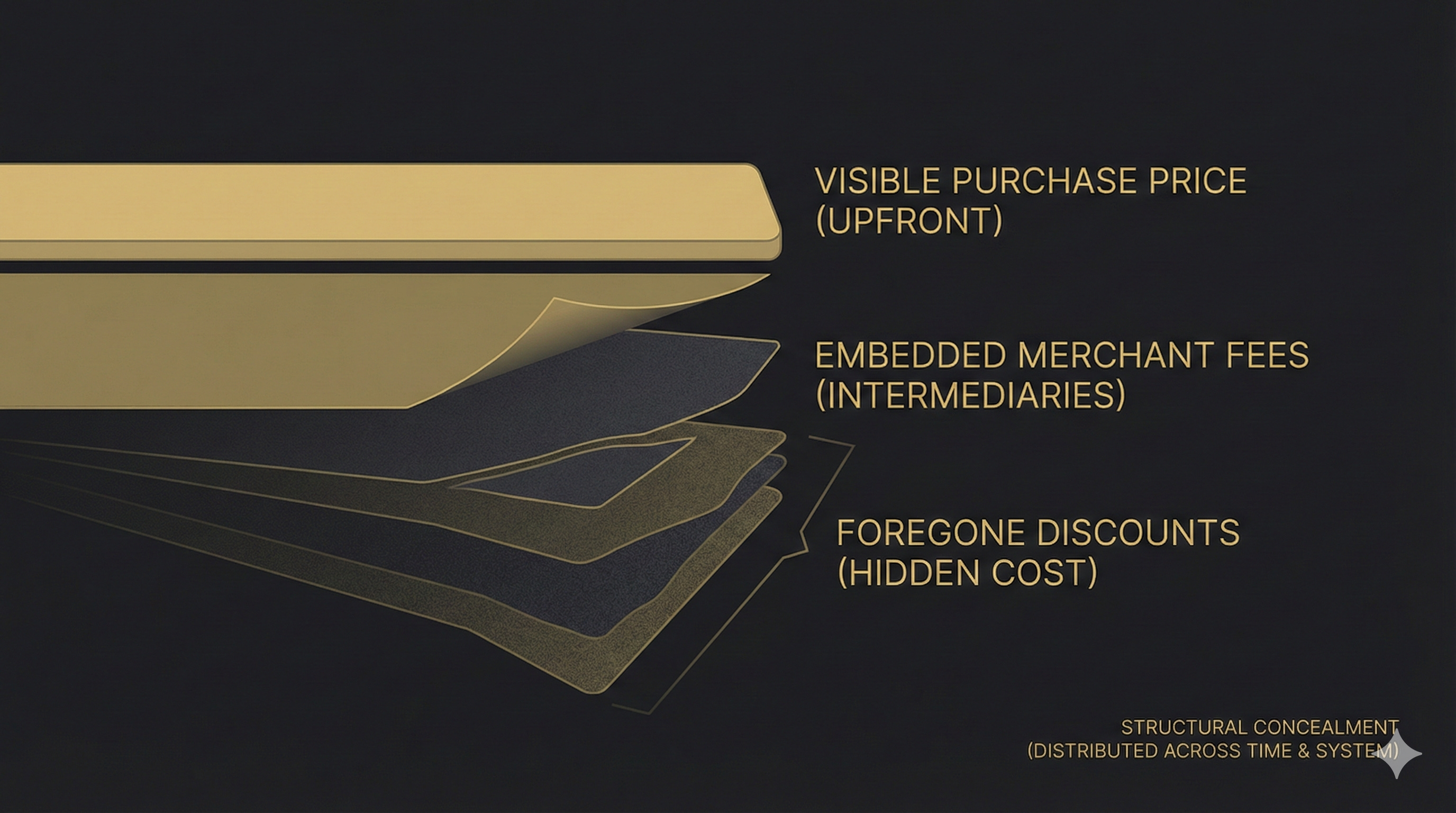
Zero-cost EMIs don’t remove cost.
They just hide it better.
First principles: money always has a cost
Let’s start with a simple rule that never breaks:
If money is used over time, someone pays for that time.
Banks don’t lend for free.
Payment networks don’t operate for free.
Merchants don’t absorb costs out of goodwill.
So when interest appears to disappear, the only real question is:
Who is paying instead of you?
How zero-cost EMIs actually work
Here’s what usually happens behind the scenes.
1. The bank still earns interest
But not from you.
The merchant pays the bank a merchant discount rate (MDR) or a financing fee.
This fee often ranges from 6% to 15%, depending on tenure and card network.
2. The merchant recovers this cost
In one of three ways:
Higher sticker prices
Fewer upfront discounts
Bundled pricing that looks “clean” but isn’t
So while the EMI looks free to you, the cost is baked into the system.
You just don’t see it itemized.
The illusion of “same price”
A common claim is:
“The upfront price and EMI price are the same.”
That comparison is incomplete.
The real comparison is:
Best upfront price with cash
vsZero-cost EMI price
Once you look closely, you’ll often find:
Cash discounts that vanish on EMI
Card-specific pricing that inflates MRPs
Festival “offers” that normalize higher prices
Zero-cost EMIs don’t usually make things cheaper.
They make waiting unnecessary.
What zero-cost EMIs really sell
They don’t sell affordability.
They sell permission.
Permission to:
Buy earlier than you should
Stretch beyond your comfort zone
Commit future income casually
By removing visible interest, zero-cost EMIs neutralize the last psychological barrier people have against debt.
That’s the real product.
Why zero-cost EMIs exist only for consumption
Notice something interesting:
You’ll rarely find:
Zero-cost EMIs for investing
Zero-cost EMIs for productive assets
Zero-cost EMIs for income-generating tools
They exist almost exclusively for:
Phones
Gadgets
Appliances
Lifestyle upgrades
Because zero-cost EMIs are not designed to grow wealth.
They’re designed to accelerate spending.
The opportunity cost still exists
Even if we accept the premise that interest is genuinely zero (which it rarely is), one cost remains unavoidable:
Opportunity cost
Money locked into EMIs:
Can’t be invested
Can’t compound
Can’t create optionality
Zero-cost EMIs remove interest - not impatience.
And impatience still has a price.
The real danger: normalization
The biggest impact of zero-cost EMIs isn’t financial.
It’s behavioral.
They normalize the idea that:
Everything should be bought immediately
Waiting is unnecessary
Monthly payments are harmless
Over time, this shifts how people relate to money:
Cash loses importance
Planning feels optional
Discipline feels outdated
That’s when EMIs stop being tools - and start becoming defaults.
When zero-cost EMIs can make sense
To be fair, there are limited cases where they’re reasonable:
You already have the cash
You’d invest that cash anyway
You’re not using the EMI to stretch affordability
You understand the trade-off clearly
In other words:
The EMI serves you — not your impatience.
That’s a high bar.
Most people don’t clear it.
The question to ask before any zero-cost EMI
Not:
“Is there any interest?”
But:
“If I had to wait and save for this, would I still want it?”
If the answer is no, the problem isn’t the pricing.
It’s the timing.
Next: We’ll go one step further — from structured EMIs to frictionless debt — and unpack how Buy Now, Pay Later quietly rewires spending behavior.
Disclaimer
This is educational content, not financial, investment, tax, or legal advice.
Zenca shares perspectives and frameworks to help you think clearly - your decisions are your own.
Please think independently and do your own research.
I write to improve how we think about money.
If this helped you think more clearly about money, you can subscribe to Zenca to receive future essays directly.
Every subscription is a vote for thinking more clearly about money.
And if this resonated, take a few seconds to share it — it might change how someone else thinks about money too.